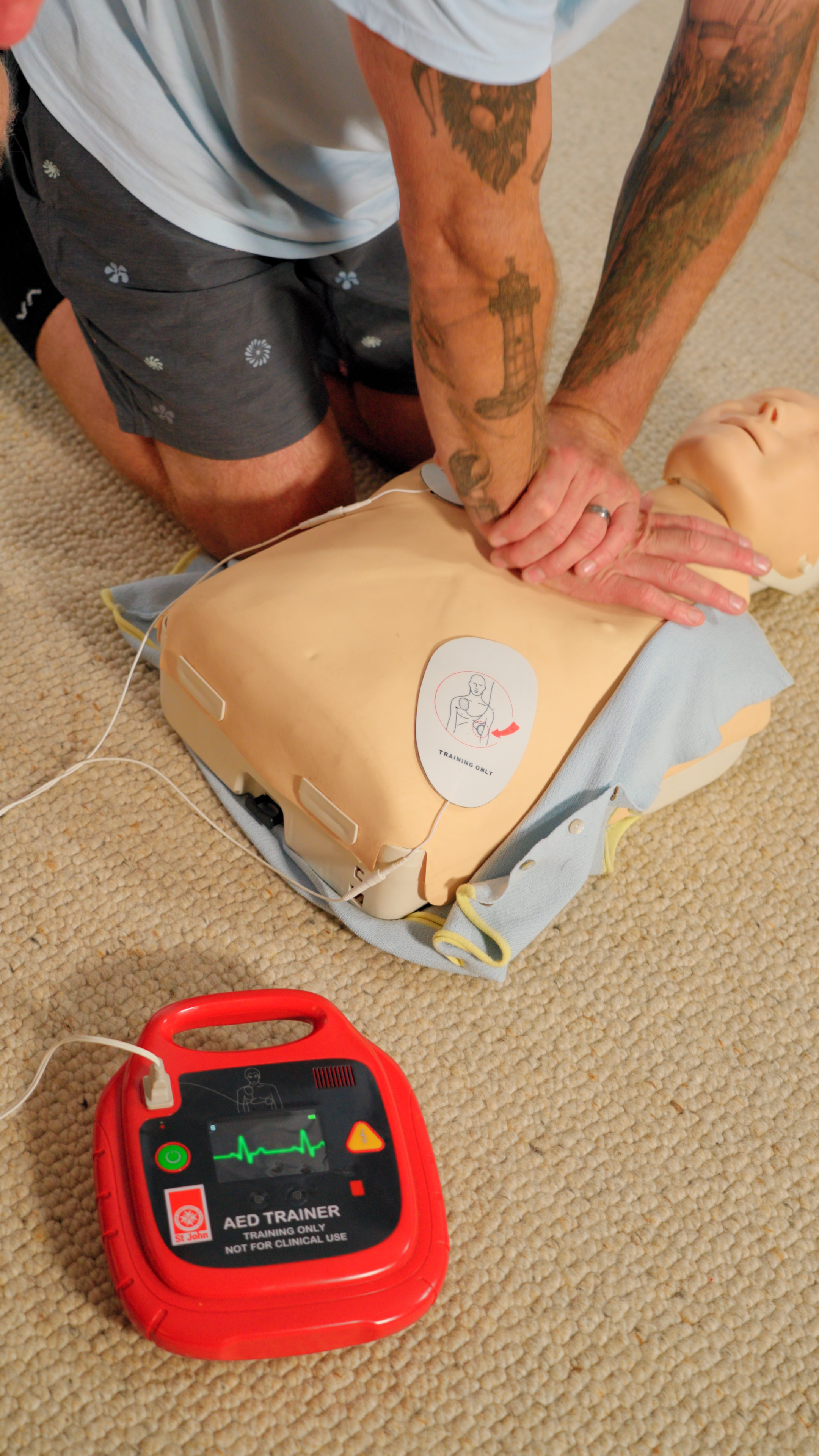
The letters stand for automated external defibrillator, and the word that matters most is automated. An AED is designed to be used by someone with no training at all.
You will find them on the wall in shopping centres, gyms, surf clubs, offices and sports grounds, often in a green cabinet. When you open one and turn it on, it speaks to you, telling you exactly where to place the pads and when to stand clear.
What it does, and does not, do
The machine reads the heart's rhythm by itself. If a shock is needed, it will tell you to press the button. If a shock would not help, it simply will not deliver one, no matter what you press. You cannot shock someone by mistake. That single fact is why reaching for an AED is always the right call.
Send someone for it
While you start compressions, send another person to find the nearest AED. If you are alone, the 000 call-taker can point you to one.
Turn it on and listen
It will guide you through the pads and everything after. Just follow the voice.
Keep doing CPR
Carry on with compressions between shocks, and do not stop until help takes over.
General guidance in line with Australian Resuscitation Council advice, not a substitute for training. Take the free course, and always call 000 first.
 Written by the Dave Winner Foundation